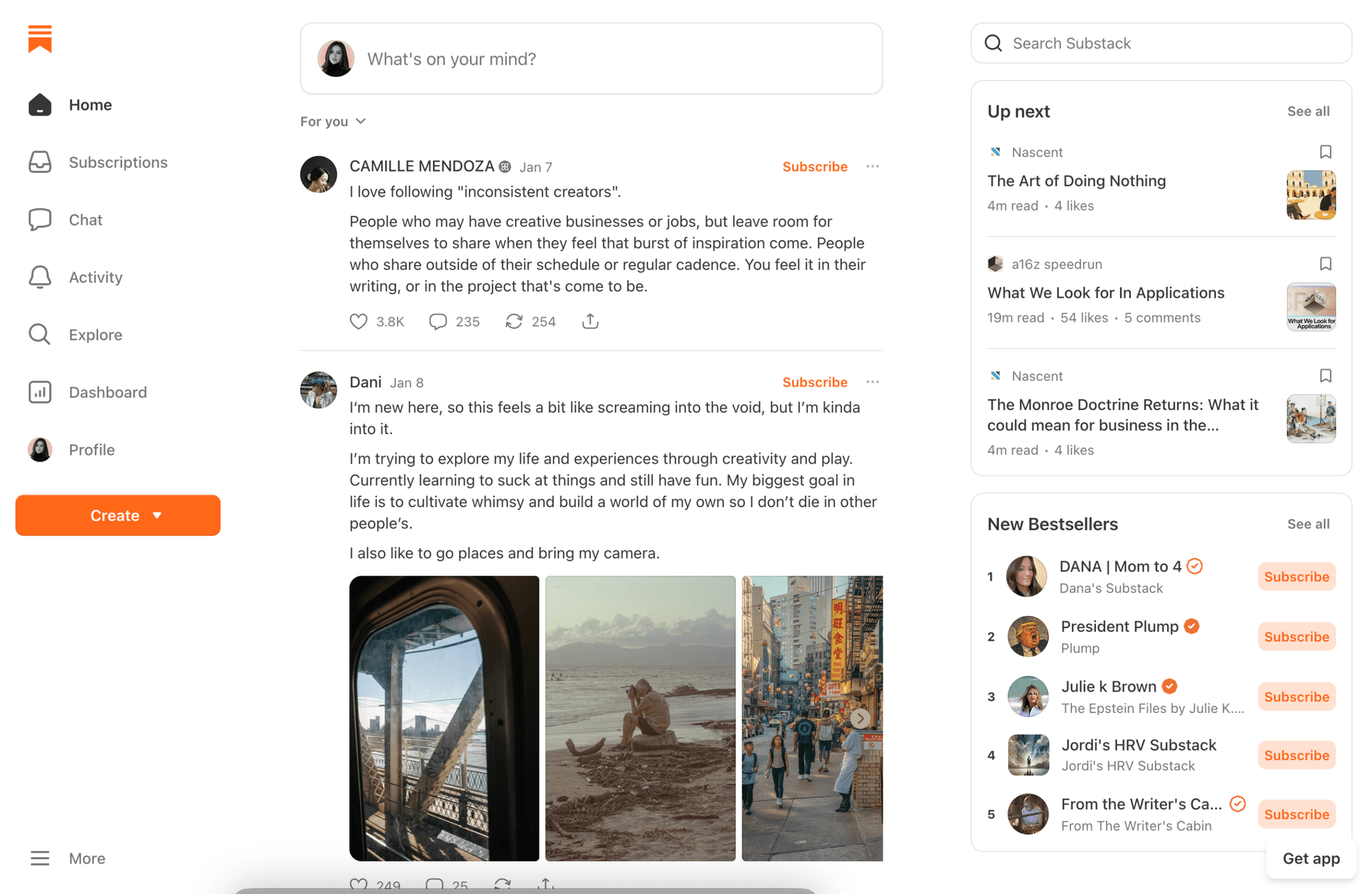
If you’ve been thinking about starting a Substack but keep putting it off, you’re not alone.
Most guides make it sound either way too complicated or way too easy. They talk about growth hacks, paid subscriptions, and building an audience, but they don’t explain what Substack actually is or how to start in a calm, realistic way.
This guide is different.
Here, you’ll learn how Substack works, what it’s good for, and how to start writing without pressure, burnout, or trying to “optimize” everything. No tech talk. No fake success stories. Just a simple explanation to help you decide if Substack is right for you and how to begin if it is.
No hype. No tech words. Just real help.
What Is Substack (In Simple Words)
Substack is a platform where you can write and send emails to people who choose to follow you.
That’s it.
You write.
People subscribe.
Your words land directly in their inbox.
You don’t need:
- A website
- Coding skills
- A big audience
- Fancy tools
Substack gives you:
- A newsletter
- A simple blog page
- Email delivery
- Optional paid subscriptions
Think of it like this:
Substack = your writing + email + home base in one place
What Substack Is NOT (This Matters)
Let’s clear this up early.
Substack is not:
- A growth hack machine
- A social media replacement
- A “get rich from writing fast” tool
Most people quit Substack because they expect fast results.
That’s not how Substack works.
Substack rewards:
- Clear thinking
- Honest writing
- Showing up regularly
Who Substack Is Best For
Substack works best if you are:
- A writer who likes explaining ideas
- A creator who wants ownership (email list)
- Someone tired of chasing algorithms
- A founder, marketer, or thinker with opinions
- A human with a story, not a brand voice
If you hate writing or want instant virality, Substack will feel slow.
That’s okay. Slow is the point.
How Substack Works (Step by Step)
1. You create a Substack
You pick a name and a short description.
Tip:
Your name is fine. You don’t need a clever brand.
2. People subscribe
They enter their email.
They get your posts as emails.
No algorithm deciding who sees your work.
3. You publish posts
Each post:
- Goes to inboxes
- Lives on your Substack page
- Can be free or paid
4. You can charge later (optional)
You don’t need to charge on day one.
Most successful writers don’t.
They build trust first.
The Biggest Beginner Mistake on Substack
Trying to sound smart.
Seriously.
People don’t subscribe because you use big words.
They subscribe because they feel understood.
Instead of:
“I analyze macro trends in creator monetization…”
Try:
“I’m tired of writing online and feeling invisible.”
Simple beats impressive.
What to Write About on Substack (When You Feel Stuck)
Here’s a rule that works:
Write what you’re already thinking about.
Good Substack topics:
- Lessons you’re learning in real time
- Mistakes you made
- Things you disagree with
- Behind-the-scenes thoughts
- Personal takes on your work or life
Bad Substack topics (for beginners):
- Generic growth tips
- Rewritten Twitter threads
- SEO-stuffed how-to guides
- Content you don’t care about
Substack is personal. That’s why it works.
How Often Should You Post on Substack?
Short answer:
Once a week is enough.
More important than frequency:
- Pick one day
- Stick to it
- Keep it realistic
Consistency builds trust. Check out this blog to learn more about content creation and consistency.
How People Actually Grow on Substack (Not the Fake Advice)
Let’s be honest.
Substack does not magically grow you.
Here’s what actually works:
1. Borrow attention from social platforms
Post short thoughts on:
- Threads
- X
Then link your Substack naturally, not spammy.
2. Tell people why they should subscribe
Not:
“New post is live!”
But:
“I write about feeling lost while building things online. If that’s you, it’s here.”
3. Write like a human, not a newsletter brand
People subscribe to people.
Not templates.
The Real Substack Monetization Strategy (When You’re Ready)
Most beginners obsess over paid subscriptions too early.
Here’s the truth:
You can’t monetize what doesn’t exist.
Before you turn on paid subscriptions, ask:
- Do I have at least 100 engaged subscribers?
- Have I published consistently for 3+ months?
- Do people actually reply to my emails?
- Would I pay for what I’m offering?
If the answer is no to any of these, keep building for free.
What to Charge (When You’re Ready)
Most successful Substacks charge:
- $5-$10/month
- $50-$80/year
Don’t underprice. $5/month signals value. $2/month signals desperation.
What Paid Subscribers Actually Get
Options that work:
- More posts: Free readers get 2/month, paid get 4/month
- Deeper posts: Free = overview, paid = full breakdown
- Community access: Paid subscribers get a discussion thread or chat
- Direct support: “Pay what it’s worth to you”
What doesn’t work:
- Paywalling your best work (kills growth)
- Offering nothing different for paid subscribers
- Making it confusing what paid members get
How to Write Your First Substack Post (A Simple Framework)
Stuck on your first post? Use this structure:
The “Why I’m Here” Post
Section 1: The problem you see
Example: “Most marketing advice feels like noise. It’s optimized for virality, not for actually helping anyone.”
Section 2: Why you care
Example: “I spent 5 years trying growth hacks that didn’t work. Then I tried something different.”
Section 3: What you’ll write about
Example: “I’m writing about what actually works when you stop chasing trends and start thinking clearly.”
Section 4: Who it’s for
Example: “If you’re tired of feeling behind, this is for you.”
That’s it. One post. Published. Done.
How to Overcome Substack Writer’s Block
You’ll hit weeks where you don’t know what to write.
Here’s what works:
The Question Bank Method
Keep a running list of questions people ask you:
- In DMs
- In comments
- In real conversations
When you’re stuck, pick one question and answer it.
The “What I’m Learning” Method
Write about:
- A mistake you just made
- Something that surprised you
- A belief you used to have that changed
Your learning curve is more interesting than your expertise.
The “Against the Grain” Method
Find a popular opinion in your space and disagree with it (if you actually disagree).
Example:
- “Everyone says you need to post daily. I think that’s burnout waiting to happen.”
- “Most people say you need a niche. I think niches trap you.”
Honest disagreement gets attention.
How Tools Like Bolta.ai Help (Without Killing the Soul)
One reason people quit Substack is burnout.
They overthink.
They wait for the “perfect” idea.
They forget what they wanted to say.
This is where systems help.
Tools like Bolta.ai help creators:
- Save ideas when inspiration hits
- Turn rough thoughts into drafts
- Plan posts without pressure
- Stay consistent without forcing creativity
The key:
Use tools to support your thinking, not replace it.
A Simple Substack Starter Plan (No Overwhelm)
Here’s a calm way to start:
Week 1
- Create your Substack
- Write one honest post
- Publish it
Week 2
- Share one sentence from it on social media
- Link it naturally
Week 3
- Write again
- Don’t worry about numbers
That’s it.
You’re doing it right.
Common Substack Fears (And Why They’re Wrong)
“Nobody will subscribe”
True at first. But if you write clearly and share it honestly, people find you.
Start with 10 subscribers. Then 50. Then 100. It compounds.
“I’m not a good enough writer”
Substack isn’t about perfect prose. It’s about clear thinking.
If you can explain something in a way that helps one person, you’re good enough.
“Someone else is already writing about this”
Yes. And people still want YOUR version.
Your experience, your voice, your examples — that’s what makes it different.
“I’ll run out of things to say”
Unlikely. If you’re learning, working, or thinking, you have material.
The problem isn’t lack of ideas. It’s lack of permission to share them.
Should You Start a Substack in 2026?
Yes, you can have ownership, but don’t start a Substack if you are looking for shortcuts.
Substack is for people who:
- Want a long-term voice
- Care about clarity
- Are not focused on virality
If that sounds like you, start.
You don’t need permission.
Frequently Asked Questions About Substack
Is Substack free to use?
Yes. You can write and publish for free. Substack only takes a cut if you charge for subscriptions.
Do I need a big audience to start?
No. Most writers start with zero subscribers.
Can I use Substack for free?
Yes. Many people stay free forever and still build strong audiences.
Is Substack good for beginners?
Yes. It’s one of the simplest ways to start writing online.
How long should a Substack post be?
As long as it needs to be. Some great posts are 300 words. Some are 2,000.
Can I use Substack with other tools?
Yes. Many creators use planning tools, idea vaults, or schedulers to support consistency without burnout.
When should I enable paid subscriptions?
After you have 100+ engaged free subscribers and have published consistently for at least 3 months. Build trust first.
How do I get my first 100 subscribers?
Share your best insights on social platforms (X, LinkedIn, Threads). Link to your Substack naturally when people ask follow-up questions.
Final Thought
Substack isn’t about growth. It’s about showing up honestly. If you write with care, clarity, and patience, the right people will find you. That’s how it’s always worked.
The writers who win on Substack aren’t the ones with the best tactics. They’re the ones who keep showing up, week after week, with something real to say.
If you’ve been waiting for a sign to start, this is it.