Social Media Analytics
2026 Guide
Use performance signals to decide what to repeat, revise, or stop. This guide covers measurement, interpretation, and action while keeping network and integration limits explicit.
The short answer
Analytics are useful when they change the next decision
Social media analytics means collecting the performance signals a network makes available, comparing them with the goal of the content, and choosing the next experiment. It is not a universal scorecard: definitions, retention windows, attribution, and connected coverage vary by platform.
Best for
Teams reviewing content cycles and deciding what to create, revise, approve, or repurpose next.
Not best for
Buyers expecting one dashboard to replace every network’s native reporting or guarantee reach, engagement, or revenue.
Why Social Media Analytics Matter
Analytics make the next content decision more accountable.
Measure What Matters
Track reach, engagement, and growth to understand what's working and what's not.
Know Your Audience
Use available audience and account signals carefully; coverage varies by network, connection, and plan.
Accelerate Growth
Use performance signals to choose the next experiment, without treating analytics as a guarantee of reach or growth.
5-Step Analytics Framework
Follow this proven process to maximize your insights and results.
Track Key Metrics
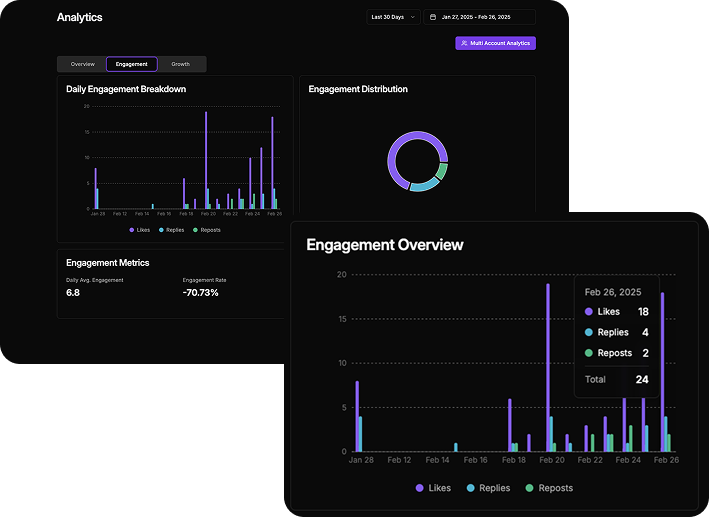
Monitor reach, impressions, engagement rate, follower growth, and content performance regularly.
- Use Bolta or platform analytics dashboards
- Focus on metrics that align with your goals
- Track both post-level and account-level data
- Export data monthly for deeper analysis
Pro Tip
Bolta's analytics dashboard makes it easy to track all your key metrics in one place.
Analyze Trends & Patterns
Identify which content, times, and strategies drive the best results.
- Look for spikes in engagement and reach
- Compare performance across content types
- Spot seasonal or weekly trends
- Use visualizations to see patterns
Pro Tip
Look for patterns over time, not just one-off spikes.
Adjust Your Strategy
Use insights to refine your content, posting schedule, and engagement tactics.
- Double down on high-performing content
- Test new formats and topics
- Adjust posting times based on audience activity
- Experiment and iterate monthly
Pro Tip
Let data—not guesswork—guide your next move.
Benchmark & Set Goals
Compare your results to industry benchmarks and set realistic growth targets.
- Research average engagement rates for your niche
- Set monthly and quarterly goals
- Track progress and celebrate wins
- Share results with your team or clients
Pro Tip
Benchmarks help you set realistic, motivating goals.
Repeat & Optimize
Review analytics monthly and make data-driven improvements for continuous growth.
- Schedule a monthly analytics review
- Update your strategy based on new data
- Stay up-to-date with platform changes
- Never stop learning and optimizing
Pro Tip
Continuous review and optimization is the secret to long-term growth.
Platform-Specific Analytics Best Practices
Every platform is different—verify definitions and coverage before comparing results.
Threads
X (Twitter)
10 Must-Have Elements in Your Analytics Strategy
Use these essentials to keep an analytics review useful and connected to the work.
- Clear goals and KPIs for your social media
- Regular tracking of key metrics
- Platform-specific analytics tools
- Monthly performance reviews
- Content and audience insights
- Benchmarking against industry standards
- Actionable reporting and visualization
- Strategy adjustments based on data
- Team/client sharing and collaboration
- Continuous learning and optimization
Social Media Analytics FAQs
Your top questions about analytics, answered.
What is social media analytics?
It's the process of tracking, measuring, and interpreting data from your social media accounts to improve your content, engagement, and growth.
Which metrics matter most?
Key metrics include reach, impressions, engagement rate, follower growth, click-through rate, and content performance.
How do I use analytics to grow?
Use analytics to identify what content works, when to post, and which strategies drive the most engagement and growth. Adjust your approach based on data.
Does Bolta offer analytics?
Bolta can expose available performance reporting and insights for connected workflows, but coverage depends on the network, account permissions, and plan. Verify the current dashboard and native platform analytics for the metrics your team needs.
How often should I review my analytics?
A monthly review is ideal for most creators and brands. Adjust your strategy as you spot new trends and opportunities.