AI social media agents do not become useful because you give them more tasks.
They become useful when they understand the environment those tasks belong to.
A vague instruction such as “post three times a week” leaves too many decisions undefined. The system still has to guess what your company believes, who it is speaking to, what counts as a good post, and which claims are safe to make.
Start with business context
Your agent should know what the company actually does.
At minimum, capture:
- what you sell
- who it is for
- the main customer problems
- your positioning
- important product limitations
- current offers or priorities
This prevents a common failure mode: fluent content that is strategically wrong.
Add audience context
“Small businesses” is often too broad.
Specify the buyer or reader you care about.
For example:
Founder-led SaaS companies with small marketing teams that already publish content but struggle with consistent distribution.
That is much more useful than “entrepreneurs.”
Add brand voice examples
Do not rely on adjectives alone.
Give the system examples of writing that already sounds right.
A dedicated AI Brand Voice setup can preserve patterns from real content instead of forcing every task to begin with “sound authentic and professional.”
Define the source of truth
An agent needs to know where facts come from.
That may include:
- your website
- product documentation
- approved messaging
- customer research
- founder notes
- existing high-performing content
If the system does not know which sources to trust, it may fill gaps with assumptions.
Define the job clearly
“Manage our social media” is not a useful job description.
A better recurring job might be:
Every Monday, turn the strongest product, customer, and founder insights from the previous week into five draft posts for LinkedIn and Threads. Keep claims grounded in approved product information and send every draft for review.
That is specific enough to evaluate.
Define what the agent must not do
Boundaries matter as much as goals.
Examples:
- do not invent customer stories
- do not publish financial claims without a source
- do not mention unreleased features
- do not use certain phrases
- do not publish automatically for high-risk topics
Separate available agents from active work
An AI Agent existing in your workspace does not mean it should constantly act.
Think of AI Agents as capabilities. Jobs and routines define what they are actually responsible for doing.
This distinction keeps automation understandable.
Give feedback in a reusable form
If you repeatedly edit the same thing, convert the edit into a rule or context update.
“Make this post shorter” fixes one draft.
“For Threads, prefer one concise idea and avoid multi-paragraph introductions” improves future work.
Use a review boundary
The more autonomy an agent has, the clearer the review policy should be.
A social media approval workflow gives teams a way to separate content generation from the final public decision.
Good agents need context, not magic prompts
The best prompt cannot compensate for missing business information forever.
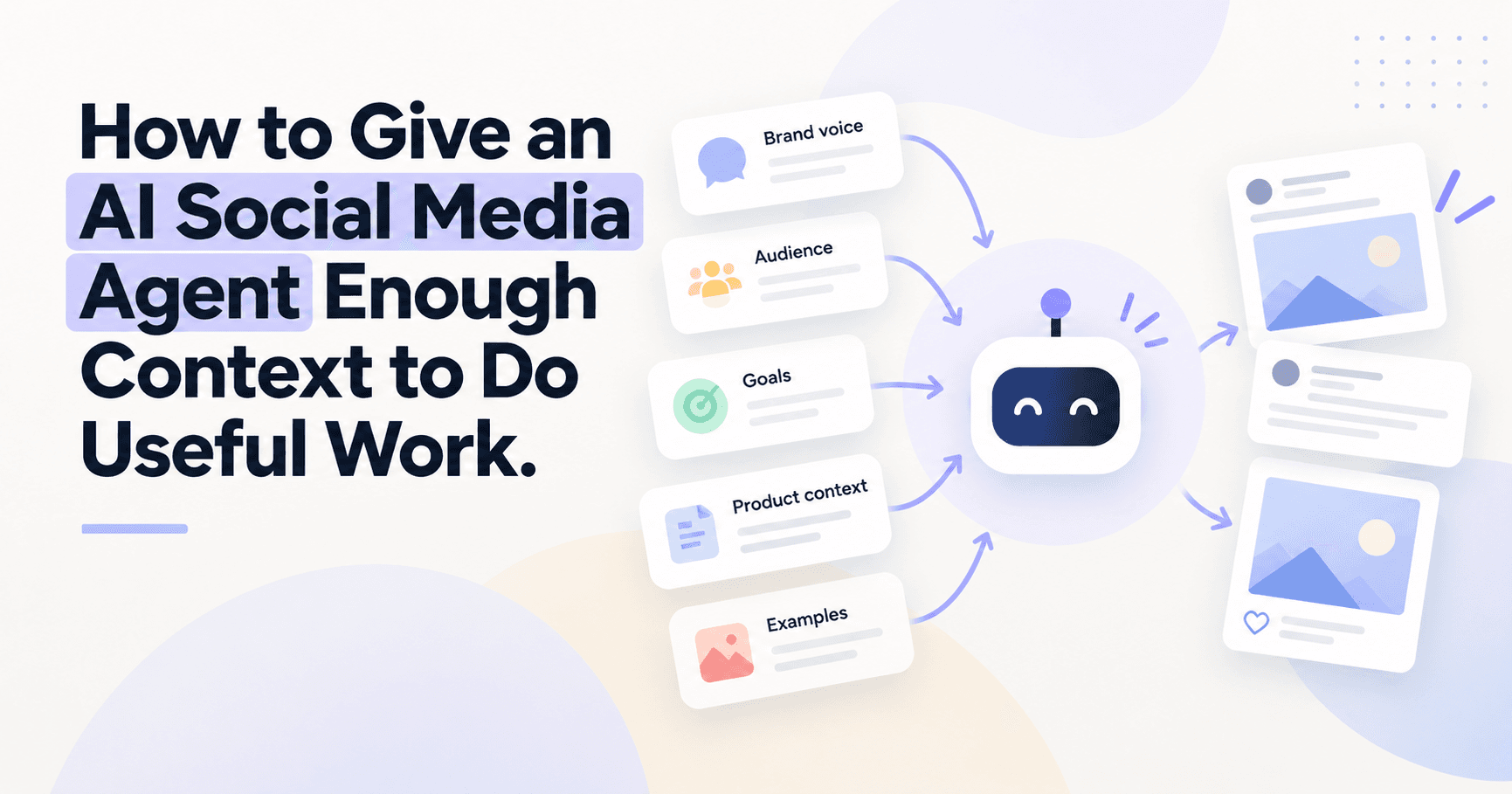
Give the system a clear company model, audience, voice, sources, job definition, and boundaries. Then refine those inputs as you learn.
Want to build recurring social workflows around persistent context? Explore Bolta AI Agents.